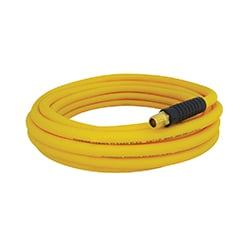
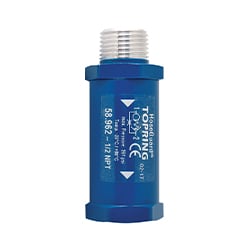
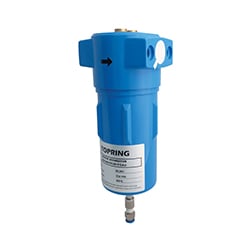
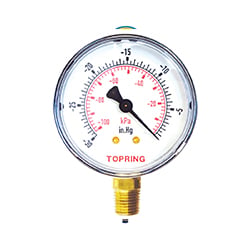
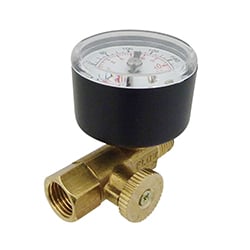
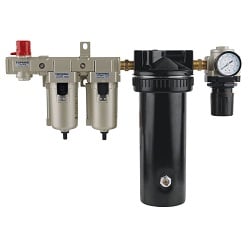
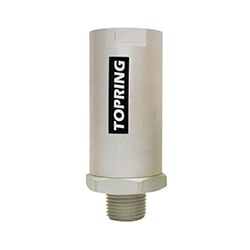
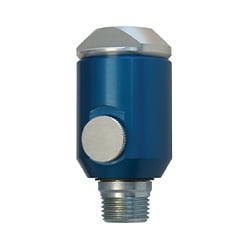
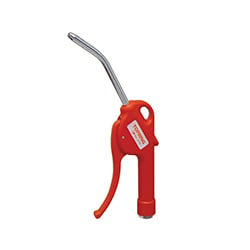
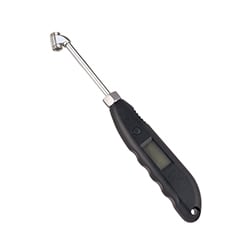
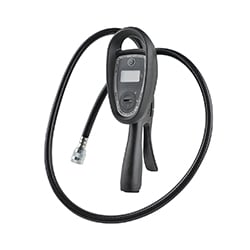
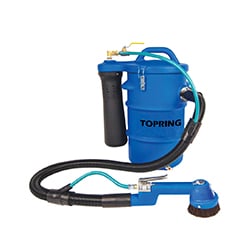
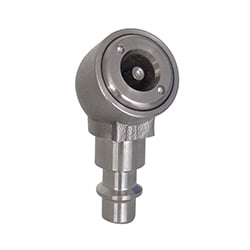
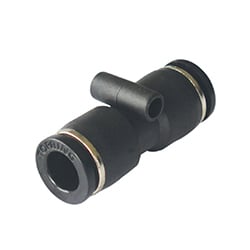
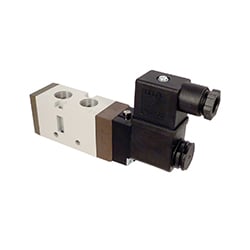
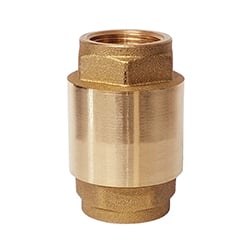
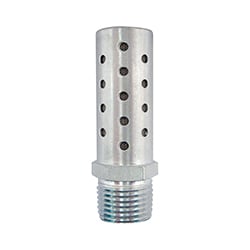
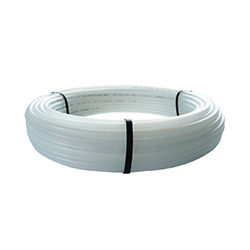
Accidents caused by improper use of compressed air are common. Safe and appropriate use of products for compressed air reduces the risk of injury and improves overall productivity. We have grouped our security solutions according to the problem to which they relate. Take stock of your solutions and consult our Compressed Air Hazards brochure to complete your compressed air system.
Table of contents
How to clean with compressed airHow to prevent hose whips
How to reduce noise exposure
How to avoid accidental start-ups
How to make your workstation ergonomic
How to prevent tripping
How to protect the air system from overpressure
How to dispose of condensates
12 safety rules to remember
Links of interest

How to clean with compressed air
First and foremost, a few precautions to take when using compressed air to clean.
- Wear safety glasses to prevent particles from irritating or damaging your eyes.
- Inspect equipment (e.g., ensure debris is not lodged inside the blow gun)
- Never point a jet of air directly at a colleague
When we talk about cleaning with compressed air, you have 3 possibilities:
- Cleaning of equipment by blowing
- Cleaning of equipment by vacuum
- Body cleaning by vacuum
⚠️ Warning
It is illegal to use a blow gun to remove debris from clothes or bodies. This is a very common practice and yet it is prohibited by law (learn more about cleaning regulations). The air jet pressure presents many risks of personal injuries, such as:
|
|
Cleaning of equipment by blowing
A compressed air system in a plant normally operates between 80 and 120 PSI. Most pneumatic tools require a working pressure of 90 PSI. This is the case with compressed air blow guns.
A blow gun is considered safe when the static pressure at the point of blockage is less than 30 PSI. Why? Because the chances of injury are virtually zero. See the article Are You Familiar With the 30 PSI Standard for Blow Guns? to learn more about this rule.
Static pressure below 30 PSI
If you are using a blow gun or air gun, make sure that the tool has a nozzle that reduces the pressure under 30 PSI if the end of the nozzle becomes blocked. If the nozzle is blocked, the air stream is diverted to the side openings, reducing the static pressure.
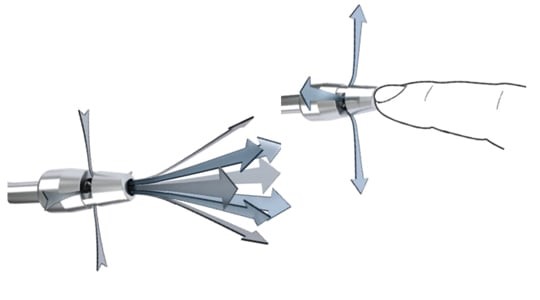
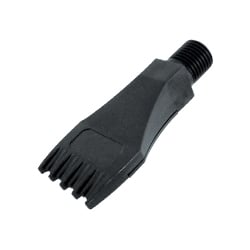
Here are three examples of nozzles that have this feature.
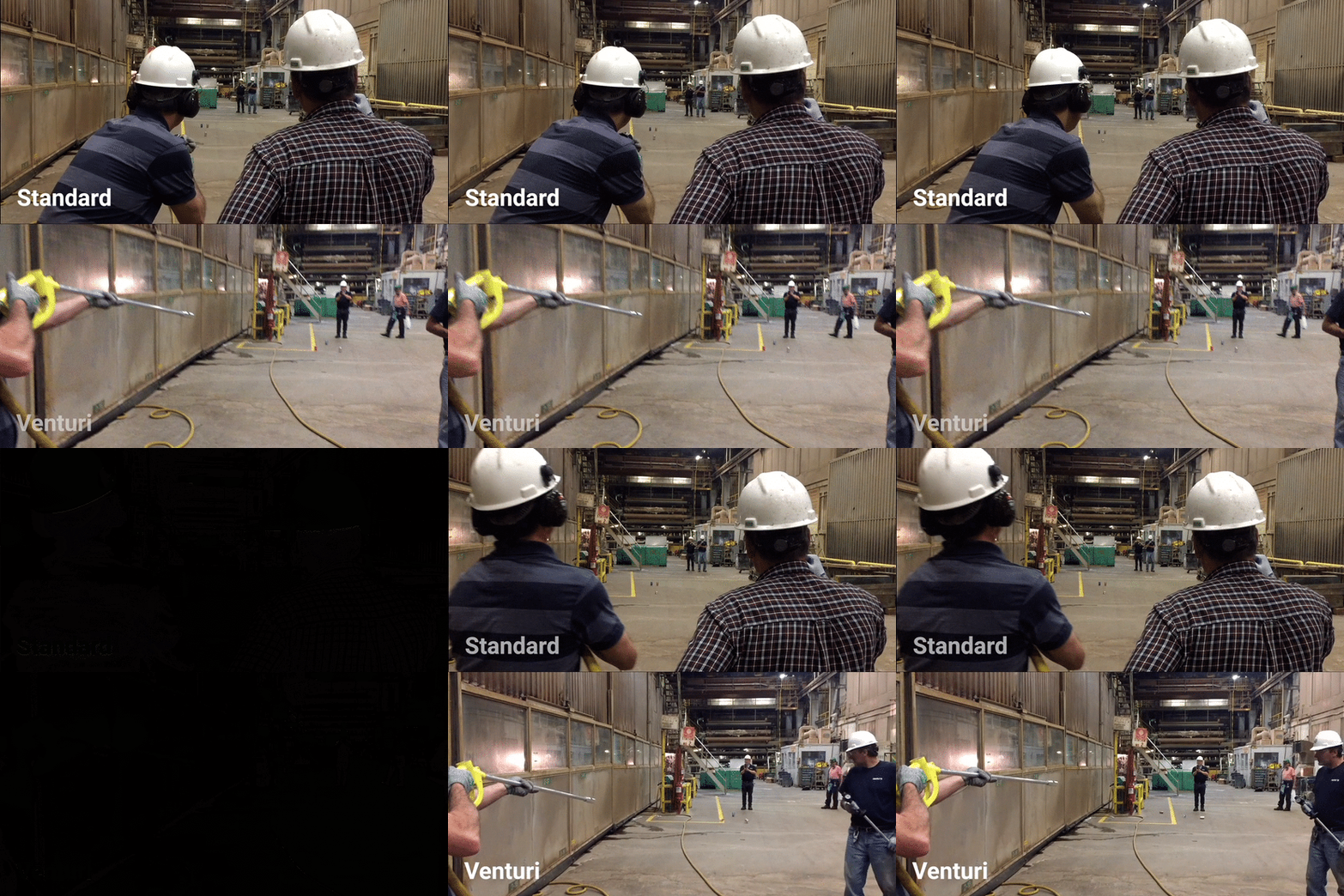
The venturi-type nozzle draws in ambient air through the side holes. The displacement of the air is then amplified up to 25 times. Therefore, this type of nozzle offers unparalleled efficiency in addition to protecting you during a cleaning operation. The comparison below between a standard nozzle and a venturi nozzle shows this well. The cans are quickly taken down with the use of a venturi nozzle, while a standard nozzle requires a little more precision.
Startip nozzles, as their name suggests, have star-shaped tips. Like venturi-type nozzles, they produce a concentrated jet of air for maximum efficiency. Both nozzles offer the same safety feature that allows air to escape through the radial holes if the tip is blocked, allowing the static pressure to remain below 30 PSI.
Flat nozzle blow guns are specially designed to deliver a powerful jet of air to a specific location. They are ideal for cleaning workbench surfaces, machinery, equipment, and areas requiring a low volume of noise. Use a flat nozzle to clean chips and splinters, clean parts and equipment, blow, dry, and move dust.
Output pressure at 0 PSI in case of obstruction
Some models of safety blow guns have an internal valve that completely stops the air jet in case of nozzle obstruction. The output pressure is automatically 0 PSI if the tip of the nozzle becomes blocked. The valve re-activates to let air in as soon as the tube is clear. This type of blower is therefore the safest on the market.
Reduce pressure at tool air inlet or point of application
There are also safety solutions to make a non-restricted blow gun that is not equipped with a nozzle to reduce pressure under 30 PSI or an internal mechanism that completely stops the air stream in case of nozzle obstruction.
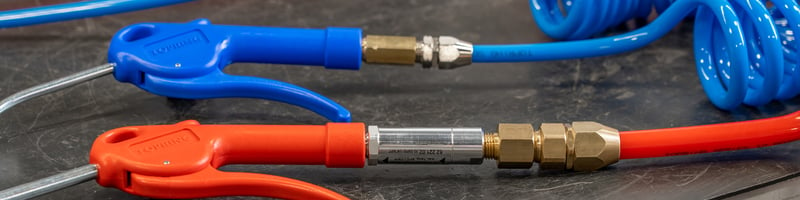
A 29 PSI preset pressure regulator installed at the tool fits directly into pneumatic tools and blow guns. It provides a constant outlet pressure, regardless of the inlet pressure. It prevents overpressure and excessive air consumption (which reduces energy costs).
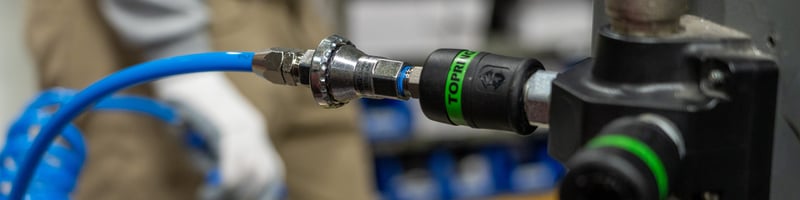
A 29 PSI preset pressure regulator installed directly into the compressed air system provides accurate and consistent output pressure. Regardless of the inlet pressure, it is not possible to tamper with the mechanism. It prevents dynamic pressure loss by limiting the overconsumption of air, which promotes energy savings.
Beware of dislodged particles
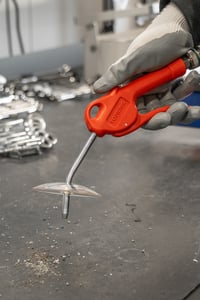
When cleaning with blow guns in confined areas, debris can fly back into the face, causing serious injury. That’s why for such operations, OSHA and other health and safety agencies require that you protect yourself effectively.
In addition to wearing safety glasses, which are highly recommended, you can equip the blow gun nozzle with a protective shield to protect you from dislodged particles flying back.
Some blow guns are equipped with a protective air screen: a small portion of the main air stream is deflected through the slots around the nozzle to form an air screen that will protect you from the blowback of debris and dust. In the event of nozzle obstruction, all airflow is diverted to the side openings and static pressure is maintained at less than 30 PSI.
Cleaning of equipment by vacuum
When cleaning equipment, it’s preferable to use suction. This is much better than blowing and even better than sweeping. Suction makes it possible to pick up large dry and/or liquid debris. It is therefore perfectly suitable for collecting a wide variety of waste, such as:
|
|
|
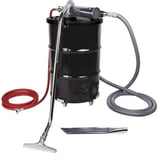
The vacuum barrel cleaner is powered by compressed air. Therefore, it operates without electricity, limiting the risk of explosion or fire caused by static charge. Using a vacuum cleaner also avoids blowing debris and thus eliminates any risk of debris flying back in the face of others or oneself.
The compressed airflow rate influences the suction performance. For best results, use a hose with a minimum inside diameter of ¾ inche and a high flow (high-throughput) quick coupler.
Body cleaning by vacuum
Since the law prohibits using compressed air to clean the body, use something with suction instead. Although blowing dislodges dust, it also involves blowing particles into the air, which inevitably contaminates the air you breathe. In the long term, exposure to contaminated air can cause respiratory complications and illnesses. Did you know that 3 out of 4 cleaning-related accidents are caused by particles being blown into the eye, despite wearing protective eyewear?
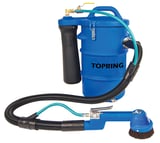
Cleaning units are a good alternative for cleaning the body since they have powerful suction. The brush is composed of an internal agitator that lifts particles from the surface and aspirates them efficiently. For maximum safety especially if you work in an industry that produces a lot of dust or other particles (e.g. sawdust, wood chips, and wood meal), equipping your workshop with a cleaning unit is a good investment.
Advantages and features of the personal cleaning unit:
- It does not emit a jet of compressed air, thus there is no physical risk.
- It has a standard filter (0.8 micron), HEPA filter (0.3 micron), or antistatic filter.
- It is ideal for removing particles stuck by moisture or sweat.
- It can be installed on a vertical surface to save space and is easy to maintain.
- It keeps the work environment clean.
- It is powered by compressed air. The absence of an electric motor eliminates the risk of sparks.
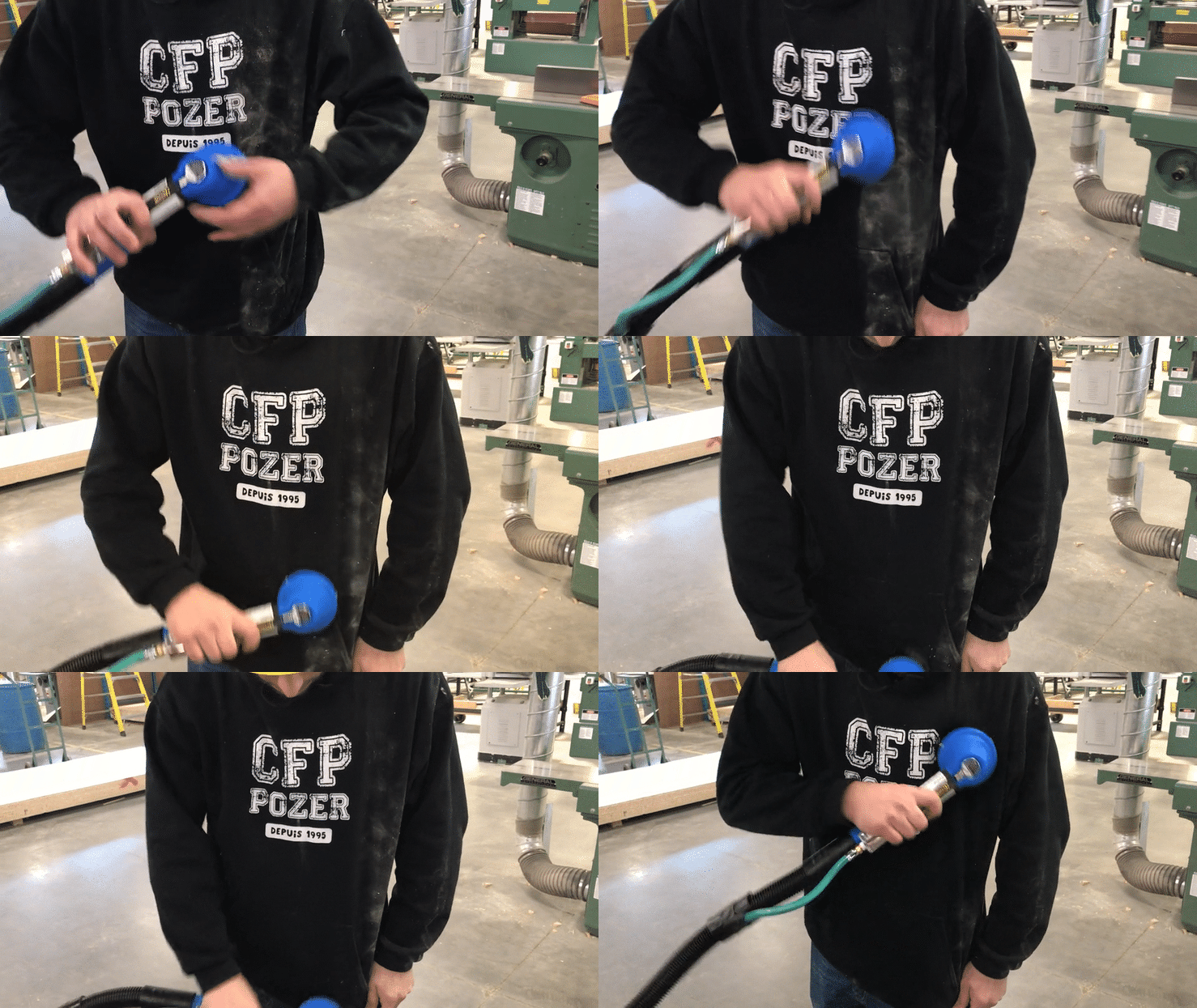
Vaccum guns are a smaller and less cumbersome solution. This type of vacuum can be used for both surface cleaning and body cleaning.
- They are easy to handle.
- They have powerful suction to collect debris.
- They are designed for heavy-duty use.
- They are powered by compressed air. The absence of an electric motor eliminates the risk of sparks.
⚠️Reminder: never use an air blow gun to clean yourself. ⚠️

How to prevent hose whips
When a fitting detaches from a pressurized flexible hose or when a pressurized hose ruptures, the flow of compressed air escapes uncontrollably. The hose then produces a whipping motion and can result in it hitting or whipping everything in its path. Projectiles or a hose in a whiplash motion is equivalent to a speed of 150 km/h, which can cause :
- Injury to nearby workers or bystanders
- Damage to parts in production
- Rising of dust from the floor
- Dispersion of particles in the air
Best Practices
- Never leave your hose lying on the ground as you could run over it with a forklift for example. It may wear out prematurely by repeatedly rubbing on the ground or, it could become damaged by pulling it if it’s stuck.
- Never let a 50-foot hose that is fully extended out of the hose reel to retract freely.
- Always make sure you have the right type of coupler plug with the right type of quick coupler (female and male compatible).
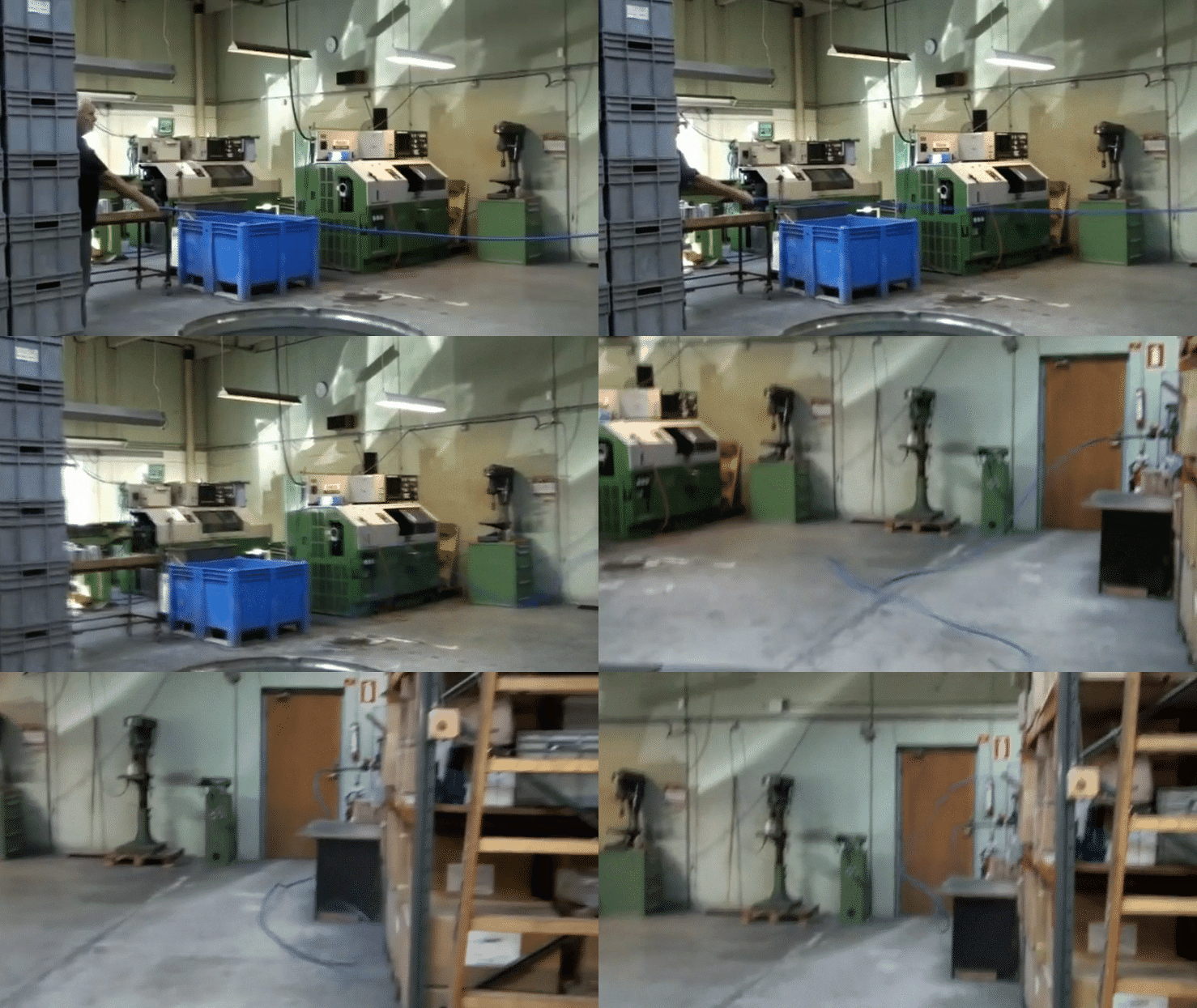
Securing air hoses
To prevent hose whips caused by an accidental hose disconnection, you can install a air fuse between the supply point (e.g., at the FRL outlet) and the air hose. The value of the air fuse is preset at the factory and configured to allow free passage of air during normal use of an air tool. If the air consumption exceeds the preset value of the air fuse, the internal piston immediately shuts off the compressed air supply. Once the breakage is repaired, a built-in bleed hole allows some air flow to escape. This automatically resets the air fuse.
Demonstration of a hose break with or without an air fuse:
Because of its process, the air fuse enforces two safety standards related to the use of air hoses:
"Any flexible hose exceeding 1/2 inch I.D. must have a safety device at the source of supply or at its connection point on the line, to relieve pressure in the event of hose breakage." OSHA Standard No. 1926.302(b)(7)
"Where a failure of a hose assembly or rigid plastic tube constitutes a whiplash hazard, it shall be restrained or protected by appropriate means, and/or a compressed air safety valve shall be installed." Standard ISO 4414-11 (5.4.5.11.1)
⚠️ Caution: Care must be taken when selecting an air fuse. The safety of the users and the proper operational function depends on it. Read the complete air fuse selection information before making a choice.⚠️
Quick couplers with zero pressure disconnection are also another way to prevent dangerous hose whips and accidental disconnections. When there is a disconnection, the pressure is vented downstream before the plug is removed. There are two types of connections available:
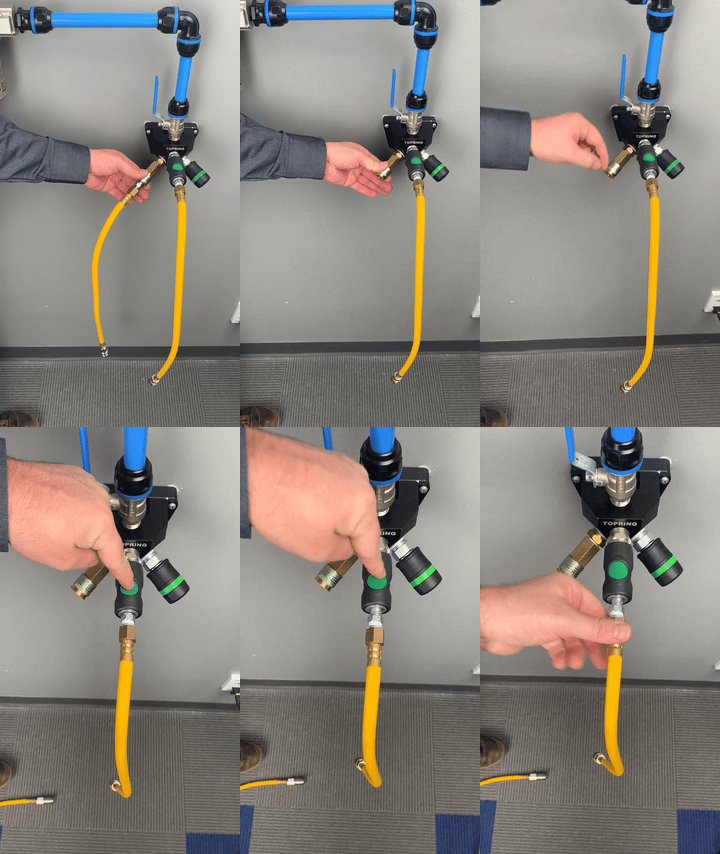
A two-stage disconnection system releases the downstream pressure, disconnecting the plug while it remains in the fitting. A manual action then releases the plug completely while the pressure is zero. For maximum safety, some fittings also require pushing the ring of the fitting back to reposition the butt in a straight line for removal. The butt should be held by hand until the hose is completely vented.
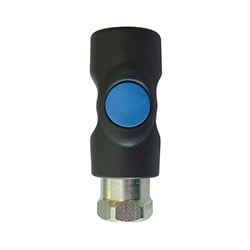
A similar one-touch disconnection mechanism is also available with some fitting models. With a single push of the button on the fitting, air pressure is cut off and automatically removed downstream. The plug is disconnected, but retained in the fitting. It can then be safely removed. For maximum safety, equip your air system with safe quick couplings with zero pressure disconnection.
See the article How to Choose a Quick Coupler for a guide to the coupling selection process.
Securing air hose reels
For maximum safety, equip your hose reels with an air fuse or, when purchasing, opt for a hose reel that comes with an air fuse.
If the air consumption exceeds the preset value of the air fuse, the air supply to the hose reel is immediately cut off by the internal piston of the air fuse.
Whiplash can also be caused by an automatic hose recoiling too fast automatic on a standard reel. If the hose is not retained by the user, the consequences will be the same as when a pressurized hose breaks or becomes detached.
For maximum safety, equip your reels with a slow-motion recoil device or opt for a reel that comes with one. This allows you to rewind the hose slowly and evenly.

How to reduce noise exposure
Excessive noise in the workplace is one of the most common hazards to workers’ hearing health. Even though it can cause permanent damage to hearing, its effects are often underestimated. Yet noise-induced hearing loss is now the most costly occupational disease for society.
To prevent these risks, organizations such as OSHA (Occupational Safety and Health Administration) and other occupational health and safety agencies have established strict standards for daily noise exposure. These regulations aim to limit permissible noise levels in industrial and manufacturing environments and to encourage the use of appropriate hearing protection to reduce the risk of hearing loss. By raising worker awareness and applying proper prevention practices, it is possible to protect hearing health while maintaining a safe and productive work environment.
Noise exposure
In a factory or any other workplace, noises do not simply add together — they combine. For example, if two sources each emit 80 dB, the total exposure level will not be 160 dB, but 83 dB. This difference, although subtle, can have a real impact on hearing health.
Our brain cannot distinguish the strength of rapid or intermittent sounds that strike the ear one after another. Instead, it perceives them as continuous noise, which makes prolonged exposure even riskier.
In Canada, the legal noise exposure limit is 85 dB. Being exposed to a level above this threshold for 8 hours or more can lead to permanent hearing loss. For this reason, employers are required to provide hearing protection whenever noise levels exceed what is considered safe.
Although federal and provincial regulations establish legal exposure limits for noise, experts often recommend going beyond these minimum thresholds. To better understand best practices, we consulted an audiologist specializing in occupational hearing health in our region. She shared her professional recommendations to help ensure optimal hearing protection in the workplace.
“Considering the calibration of sound level meters and the margin of error that must be taken into account, it is recommended to wear earplugs as soon as the noise level reaches 75 dB during a continuous 8-hour period. And if the noise exceeds 82 dB, wearing earplugs becomes essential to remain below the safe limit of 85 dB. This precaution helps prevent any permanent damage to workers’ hearing health.” Andréanne Trudeau and Marie-Ève Lessard, audiologists and co-owners of the Audio Logique clinic
It is important to remember that the higher the noise level, the shorter the safe exposure time becomes. Prolonged exposure to noise represents a real risk to hearing and should never be taken lightly.
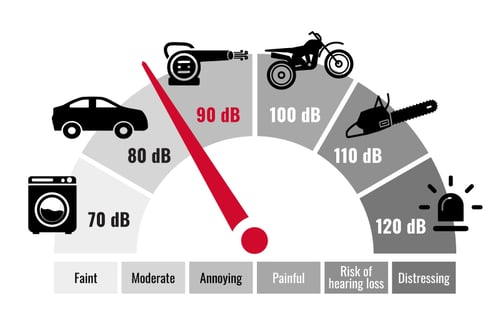
Here is a visual representation of common sound levels:
Reducing noise at the source
Personal protective equipment, such as wearing earplugs, is an effective solution for reducing the risks associated with noise exposure. When properly selected and correctly fitted, earplugs can significantly reduce sound levels and help protect workers’ hearing. However, for truly optimal protection, it is essential to go beyond individual protection. The best strategy remains to reduce noise directly at the source.
By acting at the source, the overall noise level in the work environment is reduced, benefiting everyone — not just those wearing protection. By combining noise reduction at the source with the use of hearing protection, organizations achieve the most comprehensive and sustainable solution for preserving workers’ hearing health.
Noise sources in factories vary depending on applications and industries, but one thing remains constant: noise is present regardless of the energy source used. To identify and measure the main sound sources, it is often sufficient to proceed visually, starting from the largest equipment and moving to the smallest.
First come the machines and industrial processes — such as part ejection, cleaning, drying, stamping, or moulding — which generate most of the noise. Next are the tools used daily, whether they are rotary tools, percussion tools, or tools used to vacuum or blow compressed air. Finally, quieter sources should not be overlooked: a hose reel, a balancer, a forklift, or even a door can contribute to the overall ambient noise level.
Whenever possible, it is always preferable to reduce noise directly at the source. This is the first step toward creating a safer and more comfortable work environment for everyone.
A compressed air network audit or an acoustic inspection of equipment can help quickly identify the noisiest areas and target priority improvements. Even small, well-planned interventions can make a significant difference in terms of comfort and hearing health.
The use of compressed air blow guns
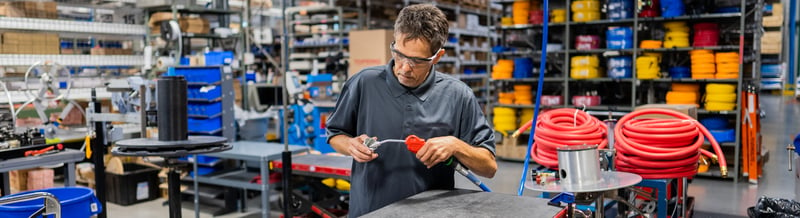
Used in many industries, compressed air blow guns are commonly used to clean, dry, or remove dust from work surfaces, as well as to eject or dry parts in various manufacturing processes.
Despite their usefulness, they can generate high noise levels, which may contribute to occupational hearing loss when used frequently or for long periods of time.
Some so-called silent blow guns emit noise levels below 85 dB, meeting the standards required in most Canadian provinces. They therefore represent an excellent option for reducing noise exposure and helping prevent occupational hearing loss.
However, it is important to understand that the actual noise level also depends on how the blow gun is used and the surface toward which the air is directed. Even a silent blow gun can produce higher noise levels depending on the angle of use, the air pressure, or the type of material being blown. This is why hearing health professionals recommend always wearing personal protection, such as earplugs, when using a blow gun, regardless of the model.
An interesting alternative is to equip your blow gun with a silent nozzle. This simple modification can reduce noise by up to 20% without compromising cleaning power or efficiency. To choose the solution best suited to your environment, consult your technical advisor.
Industrial Processes
Among the most harmful noise sources related to compressed air is the exhaust air from pneumatic valves. For example, a valve with ½-inch ports controlling a pneumatic cylinder at three cycles per second can generate a noise level of around 92 dB. This is considerably high, especially considering that prolonged exposure above 85 dB already poses a risk to hearing health.
To reduce this type of noise, a simple and effective solution is to install pneumatic silencers. These devices allow compressed air to be released much more quietly at the outlet of air valves, pneumatic motors, or percussion tools. By reducing exhaust noise, they directly help protect workers’ hearing health. Depending on the application, a pneumatic silencer can reduce noise levels by up to 85%, making it an essential component for any installation using compressed air.
For certain operations, cooling guns with integrated silencers also represent a cost-effective and high-performance alternative. In addition to providing efficient cooling that extends the lifespan of tools, they eliminate the need for coolant liquids, thereby preventing air contamination. Their main advantage is significantly lower noise levels, contributing to a safer and more comfortable work environment.
How to Avoid Accidental Start-Ups
Unexpected pressurization of an air system can activate a tool or equipment suddenly and result in serious injury. Even when the air source is disconnected, there is still air pressure stored inside a tool or equipment. This is called residual pressure. The air does not bleed out on its own, you must let it out. If you don't, the accidental start-up of a tool or equipment could occur.
Releasing residual pressure
Residual pressure is the term used to describe the pressure stored inside a tool or piece of equipment, even if the compressed air source is disconnected.
Preset pressure regulators installed directly at the tool or between the quick coupler and the hose allow residual pressure to , escape into the tool to prevent accidental activation of the tool after disconnection. They ensure a constant, preset pressure to the tool and no alteration of the mechanism is possible, regardless of the input pressure. This is an economical way to achieve the ideal tool pressure and save energy while increasing tool life. It makes it safe to use a non-restricted blow gun, since the static pressure is less than 30 PSI if the nozzle is clogged.
Locking Out Equipment
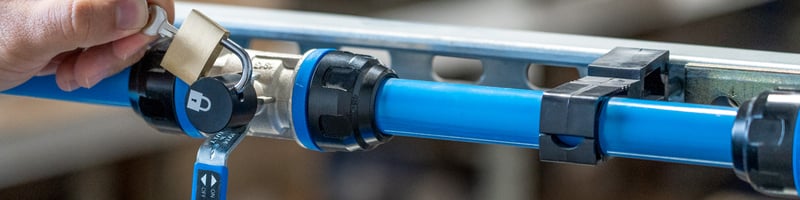
Lockout is the practice of using a padlock or safety device with a padlock to secure a machine, valve, safety valve, or shutoff valve in the closed position. This allows for safe maintenance and prevents accidental start-up of the compressed air system. This is a standard regulated by OSHA to protect workers during maintenance operations (OSHA Part. 1910.147).
Lockout valve with locking handle are a 2-position, 3-way valve that exhausts downstream air when shifted in the closed position. They are used during maintenance procedures on equipment operating with compressed air (5 microns). These valves are installed in downstream air lines or individual compressed air systems.
- With their bright yellow colour and red handle, their unique and conspicuous appearance makes them easily distinguishable from other air system components.
- A padlock can be inserted into the locking latch to lock the unit and restrict the supply of compressed air. This allows for safe downstream maintenance, since it can be padlocked.
- They have a high airflow exhaust port.
Safety exhaust ball valves with locking handle are used to isolate sections of the piping system for repairs, tie-ins, expansions, and maintenance.
- They are only lockable in the closed position, which provides maximum safety while performing work.
- When the valve is in the "closed" position, residual air escapes through the exhaust port. When the valve is in the "open" position, a simple 90° rotation of the handle immediately cuts off the flow.
- The safety exhaust ball valve body includes a threaded (10-32 UNF) depressurized vent outlet that redirects the exhaust air and allows the muffler to be assembled to reduce noise.
Lockable exhaust shutoff valves for Filter/Regulator (F/R) and Filter/Regulator/Lubricator (F/R/L) units are installed directly on the filter components. They isolate the point of application from the rest of the compressed air system. The 3-way and 2-position shutoff valves release the downstream pressure when in the closed position. They can also be locked in the closed position for safe maintenance.

Isolate a Part of the Network
Ball valves are used to isolate a part of the system for maintenance purposes. However, they do not necessarily prevent accidental start-ups, since they cannot be locked in the closed position.
Soft start valves control the supply of compressed air to the system in a progressive manner with an electrical signal. They prevent potential water hammers, which can damage sensitive equipment such as regulators. When the electrical signal is cut off, the valve shuts off the compressed air supply and releases the pressure from the system. Soft start valves are installed upstream of an FRL combination unit and downstream of a safety exhaust ball valve.
Slide valves are ideal for machine entrances and smaller areas (e.g., cubicles). When the ring is slid to the "open" position, air flows through the valve to the application. When the ring is returned to the "closed" position, the supply is cut off and the downstream pressure is released through the exhaust ports, preventing the operation of the tool or machine. This makes it a safe and economical way to operate single-acting pneumatic cylinders, pneumatic clamps, and other pneumatic equipment.
Miniature 3-way valves with exhaust are ideal for machine entrances and smaller areas (e.g. cubicles). They are ideal for automation systems (pneumatic) and are used with plastic tubes. When closed, the 3-way miniature valve releases the residual pressure.
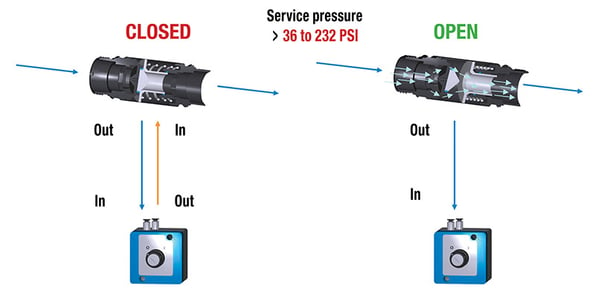
Piloted valves are ideal for ceiling installations as they allow the isolation of high sections of the air network without using a basket or a ladder. It allows the air supply to be opened and closed from the ground, quickly and safely. The user is also guaranteed safety by eliminating any risk related to working at a height. Some models can even be locked.

How to Make Your Workstation Ergonomic
Working in an ergonomic environment helps prevent injuries and accidents. This rule applies to all environments.
The main benefits of an ergonomic workstation:
- Reducing the stress of always being on the lookout or tripping over a hose on the floor
- Reduce musculoskeletal issues caused by repetitive movement, discomfort, fatigue, or heavy tools
- Reduce absences due to accidents
- Reduce errors during line production
- Increase the overall productivity of the company
Improving tool manoeuvrability
By improving the manoeuvrability of tools, you improve the performance and efficiency of your employees, while making them appreciate their work more because you make their lives easier. Your employees will thank you for it. Here are three solutions:
Coiled hoses offer freedom of movement and are therefore widely used in workshops. They stretch easily and return to their original position when the job is done. Each end has a swivel connection for better tool handling. The two ends are of different lengths: The longer and are equivalent to the length of the arm for ease of use.
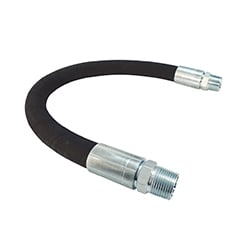
Snubber hoses improve manoeuvrability, especially in tight areas. They help reduce wrist fatigue caused by repetitive motions and contribute to increased productivity in the workplace. They are installed between the air tool and the quick coupler. They increase the life of the quick coupler, since they absorb vibration from the compressed air.
Swivel fittings and coupler plugs help reduce wrist fatigue. They come in handy in tight spaces, such as when using a sander in the furniture industry.
- They allow a 360° free rotation of ° at the base.
- They have an angle that goes from 30° to 90° in all directions depending on the model.
- They prevent kinking of the feeder hoses and thus increase the life of the hoses.
- They help prevent carpal tunnel syndrome.
Reduce physical effort
Here are some solutions to reduce the physical effort required by employees when performing their work.
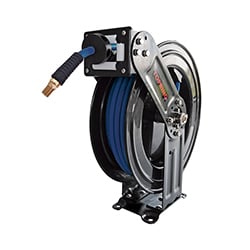
Automatic hose reels make it easy to store air hoses to have them ready to use at all times. Automatic hose reels allow you to reel in hoses effortlessly. Plus, when hoses are in reels, you can pull out only the length you need. The wrist does not have to support the weight of the hose.
Some blow gun models have a gas handle, which makes them easy to use and protects the trigger from wear and tear while protecting your fingers. When choosing a blow gun, look for one that is lightweight and fits in the palm of your hand with a good grip, making it easier to handle.
Some air guns or sprayers have a handle that is aligned with the tube as if you were holding a ski pole vertically. Other air gun models have a shoulder handle to distribute the weight of the tool and direct the air stream and/or have an adjustable auxiliary handle that allows the 2-handed operation to hold the sprayer wand.
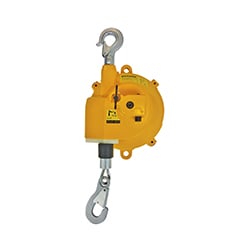
Tool balancers make pneumatic and electric tools "weightless" (0 gravity) by using a spring tension set to equal the weight of the tools. They can be suspended from a boom or track.
- They are ideal for assembly lines or work areas.
- They keep tools within easy reach. Tools suffer less damage by being suspended out of the way above the work surface.
- They reduce the number of movements made, thus promoting faster and more efficient work.
- They help reduce fatigue, resulting in greater productivity, fewer errors, and fewer injuries.
- They help prevent accidental starts by keeping tools out of the way.
- Reduce the risk of accidental falls by keeping tools out of the way when not in use.
How to prevent tripping
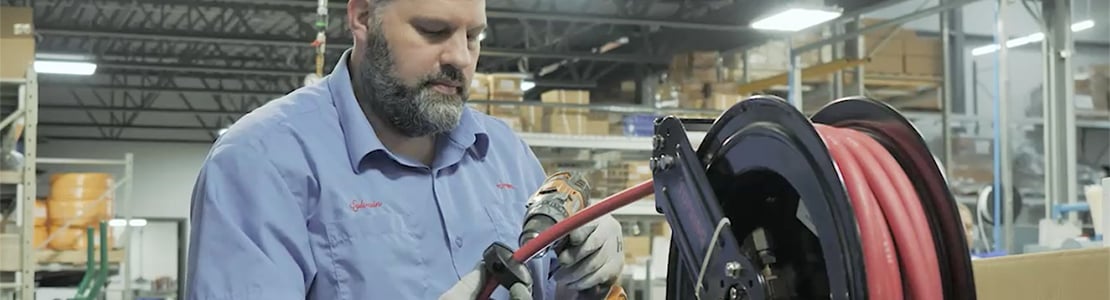
Not only can an employee fall by stepping or tripping on an air hose and hitting whatever is around them, but they can also drop the tool connected to the hose. This can cause the tool or connection to break and damage whatever was hit in the process. Tangled, untied hoses are prone to premature wear because they are more exposed to their environment of dust, dirt, oil, and other chemicals.
Hose reels can be mounted on the ceiling, wall, floor, or under a worktable. This frees up the floor from hoses and allows for easy access to tools. They increase the efficiency of using a hose. See the article How to Choose a Hose Reel for Compressed Air to learn about the different options available to you.
- They help limit the risk of accidents.
- The risk of tools and fittings falling to the ground is greatly reduced, as is hose wear.
- They reduce maintenance and replacement costs for hoses and tools.
- It also prevents the risk of hose punctures that could cause dangerous whiplash injuries.

How to protect the air system from overpressure
Overpressure occurs when the pressure in the system is higher than the air demand of the tools and equipment. Each tool and piece of equipment has manufacturing specifications and requires a precise amount of air. When using a tool or equipment, you should never exceed the pressure recommended by the manufacturer. If you don’t you could face :
- A tank or equipment explosion
- Premature wear of tools and equipment
- Problems with the quality of finished products
- Projectiles
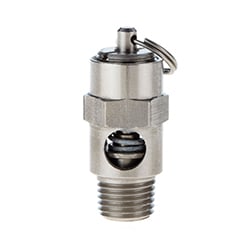
Tank and compressor safety valves are designed to protect compressed air distribution systems from overpressure. The pressure is preset at the factory to a non-alterable setting, in which case the safety valve releases the air in the system into the atmosphere.
The valves are manufactured in accordance with the safety valve standards of the "National Board of Boiler and Pressure Vessel Inspectors, Section ASME VIII." (RBQ B-1.1 r.6.1 - Section II) Many models have a Canadian Registration Number (CRN). And some stainless-steel models offer better corrosion resistance.
⚠️ Caution: You must test the safety valves annually by forcing them open manually. If you have never performed an annual test, you must change the valve 5 years from the date of service. A safety valve for tanks and compressors must, in any case, be changed every 10 years. ⚠️
How to Dispose of Condensates
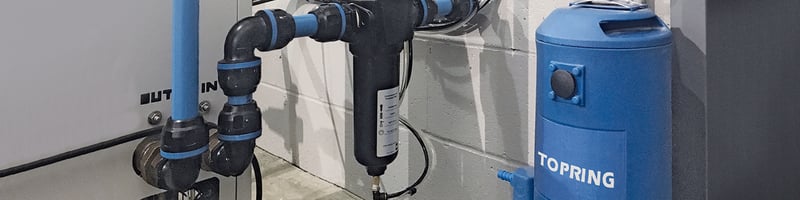
Water and contaminants cause pneumatic equipment failure and promote bacterial growth in compressed air piping. Removing and treating condensate and contaminants safely and effectively while ensuring clean, dry air quality is necessary.
Most compressors are oil lubricated. Therefore, some of the air leaving the system has oil in it from the compressor. The concentration of oil in the air is calculated in parts per million (ppm) and varies from one compressor to another. For example, a reciprocating compressor emits an average of 7 to 10 ppm, while other types of lubricated compressors can emit more than 25 ppm. A typical compressor operating at 100 SCFM for 35 hours with an oil concentration of 25 ppm introduces 240 ml of oil into the compressed air system. The oil concentration only increases as the compressor wears out.
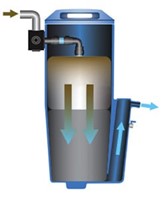
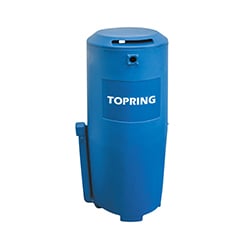
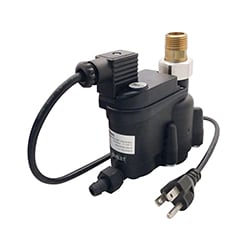
The water-oil separator is installed at the end of the condensate drain line and allows for the environmentally friendly disposal of wastewater. Its role is to collect the condensate from the compressor, filters, traps, and refrigeration air dryer by using advanced filtration technology with polypropylene adsorbents. The condensate passes through a primary filter, which depressurizes it and traps solid particles. The wastewater then passes through the filtration media, which adsorbs the oil. Following this treatment, the oil concentration at the separator outlet is less than 5 ppm, which respects environmental standards for condensate discharge. The volume of water collected is up to 99.5% clean and the small amount of residual oil, 5 mg/L, can be legally discharged to the sewer. When the filtration media is saturated, the maintenance indicator shows that it must be replaced.
Environmental standards prohibit the discharge of wastewater and oil collected from compressed air systems onto land or into bodies of water. In addition, the Council of Ministers of the Environment (CCME) has issued a guideline, setting the allowable concentration of mineral oil and grease in water discharged to the sewer at 15 mg/L (Ref. PN1422). Most Canadian municipalities follow the CCME guidelines. Failure to comply can result in significant penalties, such as fines and clean-up costs of several thousand dollars, as well as a public announcement of the violation through a press release.
Safety Poster - Compressed Air
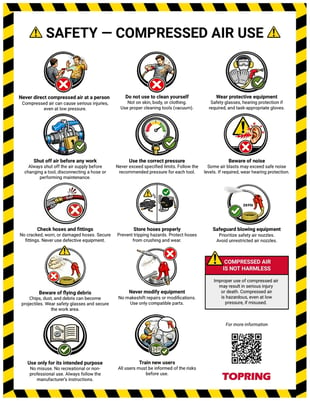
To help raise awareness among your team about the essential safety rules related to the use of compressed air in the workplace, we are providing a ready-to-use safety poster. Download it and print multiple copies to display in strategic areas of your work environment and help strengthen risk prevention and accident prevention efforts.
Click on the image to download the PDF:
Links of interest
- Canadian Centre for Occupational Health and Safety (CCOHS) ↗
- Canadian Government ↗
- Quebec Government ↗
- Healthy Hearing. Top five occupations causing hearing loss, April 21, 2016 ↗
- Canadian Occupational Safety. WSIB asking workers ‘How old are your ears?, January 27, 2017↗
- Lobe. Reasons for consultation? What is occupational deafness? 2020. . ↗
- Occupational Safety and Health Administration (OSHA) ↗